Italy Honeymoon Planning Checklist
The difference between a good Italy honeymoon and an unforgettable one usually comes down to what happens between the postcard moments. A gorgeous suite in Venice loses some of its charm if your arrival is chaotic. A dream dinner on the Amalfi Coast feels less romantic if it was booked at the wrong hour, in the wrong town, with a two-hour transfer afterward. That is why an italy honeymoon planning checklist matters – not as a rigid to-do list, but as the framework that protects the ease, beauty, and intimacy of the trip.
For couples planning a once-in-a-lifetime journey, the goal is rarely to see all of Italy. It is to experience the right version of Italy, at the right pace, with details that feel personal rather than overpacked. The smartest planning starts there.
Start your Italy honeymoon planning checklist with pace
One of the most common mistakes honeymooners make is confusing variety with romance. Italy offers so much that it becomes tempting to combine Venice, Florence, Tuscany, Rome, the Amalfi Coast, Lake Como, and Sicily in one trip. On paper, it sounds rich. In reality, it often becomes a series of unpacking sessions and transfer days.
For most couples, two or three destinations is the sweet spot for a 10- to 14-day honeymoon. A classic pairing might be Venice and the Amalfi Coast, or Florence with the Tuscan countryside and Rome. If you want lakeside glamour, Lake Como works beautifully with Milan or Venice. If your style leans toward warm-weather coastal luxury, Puglia or Capri may make more sense than trying to force in northern cities.
Pace is a luxury decision. Fewer stops usually mean better hotels, smoother logistics, and more time for the moments you will actually remember – the terrace breakfast, the unhurried afternoon, the candlelit dinner that did not require a sprint to make the reservation.
Choose the right season, not just the right destination
Italy is never one single experience. Venice in late October feels entirely different from Venice in July. The Amalfi Coast in May can be elegant and fresh, while August may feel crowded and hot, with heavier traffic and less privacy.
Spring and early fall are often ideal for honeymoon travel because they offer a balance of pleasant weather and refined energy. Late April through June and September through early October tend to be especially appealing. Summer can still be wonderful, particularly for coastal stays, but it requires more careful planning around crowds, ferries, private transfers, and premium hotel availability.
Winter has its own appeal if your honeymoon is centered on cities, art, food, and atmosphere rather than beach clubs and boating. Rome, Florence, and Venice can feel deeply romantic in the cooler months, especially for couples who prefer cultural richness over peak-season bustle.
Build the trip around accommodations first
An Italy honeymoon planning checklist should prioritize hotels before nearly anything else. For honeymoon travel, the hotel is not just a place to sleep. It shapes the tempo, privacy, and emotional tone of the entire trip.
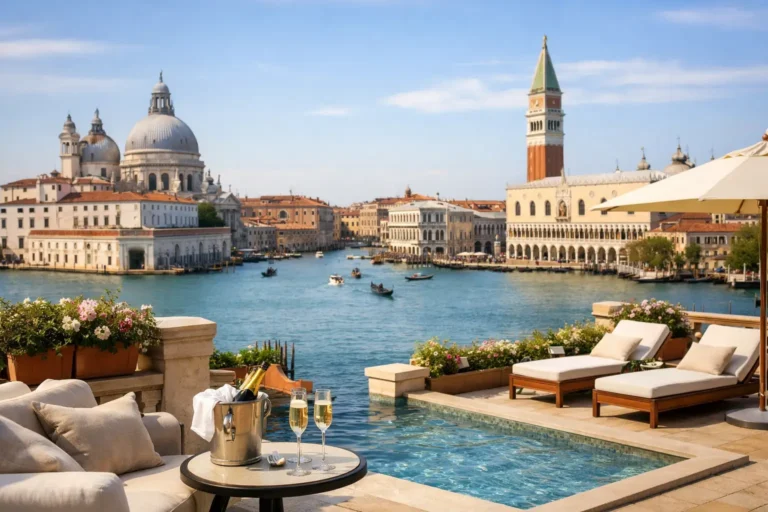
Start by deciding what kind of luxury matters most to you. Some couples want a grand hotel with polished service, a celebrated bar, and iconic views. Others want a smaller boutique property that feels discreet and intimate. A countryside estate in Tuscany offers a completely different honeymoon than a palace hotel on the Grand Canal or a cliffside suite in Positano.
Room category matters as much as property choice. A standard room in a famous hotel may not deliver the same experience as a junior suite with a terrace, lagoon view, or private plunge pool. On a honeymoon, that upgrade often has more value than adding another destination.
It is also worth looking closely at location. In Venice, canal access can transform arrival and departure. On the Amalfi Coast, where roads are narrow and transfer times can stretch quickly, staying in the town that suits your dining and activity plans can make the trip feel far more relaxed.
Plan the logistics that affect romance most
Luxury travel is often defined by what you do not have to think about. That is especially true on a honeymoon.
Airport arrivals, train connections, port transfers, luggage handling, and check-in timing all deserve attention early. Italy is beautiful, but it is not always intuitive when you are moving between airports, rail stations, islands, and historic centers with uneven streets or boat access.
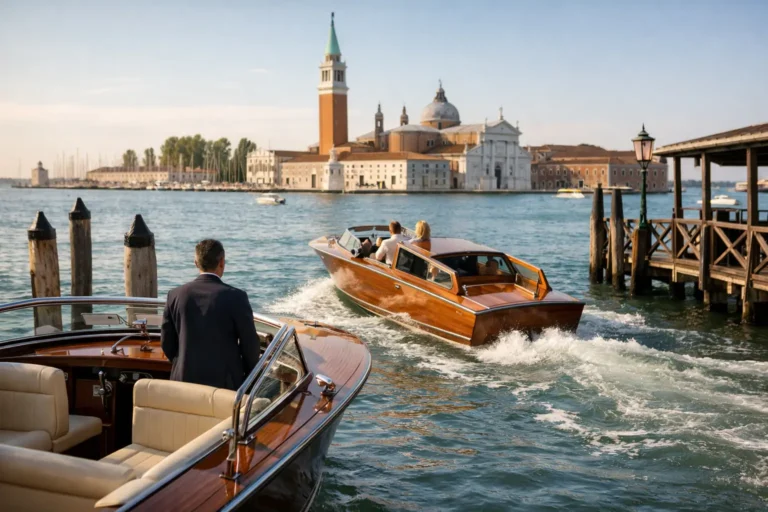
This is where couples should be honest about their tolerance for friction. If arriving in Venice by private water transfer would set the tone for the trip, it is worth arranging. If a private driver from Florence to a Tuscan estate allows you to include a wine tasting or scenic stop without managing your bags, that decision pays off in comfort. If the Amalfi Coast portion includes multiple restaurant reservations and beach clubs, coordinated transport becomes less of a luxury extra and more of a practical necessity.
The right logistical choices are rarely about extravagance for its own sake. They are about preserving energy for the parts of the trip that matter most.
Decide what deserves advance reservations
Not every moment should be scheduled, but some absolutely should. Honeymoon disappointment often comes from underbooking the pieces that shape the trip.
High-demand hotels, private guides, boat charters, beach clubs, and celebrated restaurants are often the first priorities. This is especially true in Venice, Florence, Rome, Capri, Positano, Ravello, and Lake Como during peak travel periods. Couples who assume they can arrange these details after arrival may find themselves left with second-choice options at first-choice prices.
That said, overplanning can flatten the romance. A honeymoon should still have room for spontaneity. The ideal balance is to reserve the anchor experiences in advance, then leave enough open space for slow mornings, aperitivo stops, and the kind of unplanned discoveries that give a trip its personality.
Use your checklist to define your honeymoon style
Every couple says they want romance, but romance looks different depending on taste. This part of the italy honeymoon planning checklist is often overlooked.
If your style is classic and polished, you may want private museum access, elegant historic hotels, and refined dining. If your style is relaxed luxury, your best version of Italy may be a vineyard stay, leisurely lunches, and a slower coastline with fewer scene-driven demands. Some couples want nightlife and glamour. Others want silence, views, and a suite they never feel like leaving.
A strong itinerary reflects your preferences, not someone else’s highlight reel. Italy rewards specificity. The more clearly you define your pace, aesthetic, and priorities, the more cohesive the honeymoon becomes.
Budget with intention, not guesswork
Affluent travelers are not necessarily looking for the cheapest route. They are looking for value, comfort, and decisions that feel worth it. That makes budget planning less about cutting corners and more about allocating wisely.
If you are deciding where to invest, accommodations and transportation usually have the biggest impact on overall ease. A well-located hotel and properly timed private transfers can remove far more stress than adding one extra excursion. Dining is another area where intentionality matters. It can be worth mixing marquee reservations with understated local favorites, especially in cities where the most famous table is not always the most memorable meal.
It is also wise to account for hidden costs such as porter services, water taxis, resort transfers, beach club minimums, or premium seasonal pricing. These do not ruin a honeymoon, but they can surprise couples who planned around hotel rates alone.
Leave room for one or two signature moments
The best honeymoons are rarely memorable because every hour was filled. They are memorable because a few moments felt unmistakably yours.
That might mean a private boat day on Lake Como, a sunset cruise in Venice, a photographer for one evening in Rome, a wine tasting in the Tuscan countryside, or a beautifully arranged celebration dinner on your terrace. Signature moments work because they create contrast. They give the trip shape.
For many couples, this is where concierge planning becomes particularly valuable. Details such as timing, privacy, access, and personalization matter more than the basic reservation itself. A honeymoon should feel tailored, not assembled from generic bookings.
What to confirm before departure
As your travel dates approach, the final stage of your Italy honeymoon planning checklist should focus on clarity. Confirm transfer details, reservation times, hotel notes, dietary requests, passport validity, luggage strategy, and arrival expectations. If you are moving through multiple regions, double-check the flow from one stop to the next rather than treating each booking as separate.
It is also helpful to review what you do not need to plan. Not every lunch needs a reservation. Not every museum needs to be on the agenda. A honeymoon benefits from breathing room.
For couples who want first-class planning without the first-class headache, this is often the point where professional support makes the greatest difference. A well-designed itinerary should feel calm before you even board the flight.
Italy does romance beautifully, but it rewards thoughtful planning even more. Choose fewer places, stay longer, reserve what matters, and let the details serve the experience rather than compete with it. If the trip feels effortless once you arrive, you planned it well.