Custom Italy Itinerary for Couples, Beautifully Planned
Italy rewards couples who resist the urge to see everything. A custom italy itinerary for couples should leave room for the long lunch that becomes an afternoon, the gallery visit that inspires a second glass of wine, and the quiet pleasure of arriving at a beautiful hotel without needing to solve a single logistical detail.
The most memorable Italian journeys are not built around a checklist of famous cities. They are shaped around how you want to feel together: energized by Rome’s cinematic rhythm, restored by a private terrace above Lake Como, or entirely unhurried in a Tuscan hill town. The distinction matters. A well-designed itinerary turns an extraordinary destination into a personal experience, with the right pacing, privacy, and thoughtful transitions from one place to the next.
Start With the Kind of Time You Want Together
Before choosing destinations, consider the tone of the trip. A honeymoon may call for privacy, dramatic views, and a few indulgent surprises. An anniversary journey might center on a favorite region, meaningful meals, and time to simply settle in. For couples who travel frequently, the appeal may be Italy beyond the obvious: a small vineyard visit in Piedmont, an art-focused stay in Florence, or a private boat day along a quieter stretch of coast.
This early conversation shapes every later choice. A couple who wants late dinners and elegant city hotels should not be booked into an itinerary with 7:00 a.m. train departures. Travelers who value stillness may prefer two exceptional hotels over five different stops. There is no single ideal route through Italy, only the route that reflects your pace and priorities.
For most couples, 10 to 14 nights provides the best balance of variety and ease. With less than a week, limiting the journey to one region or a city-and-country pairing is often more rewarding than trying to combine Venice, Florence, Rome, Tuscany, and the Amalfi Coast. Italy is not difficult to travel through, but frequent packing and transfers can quickly make a romantic trip feel scheduled rather than spontaneous.
Build a Custom Italy Itinerary for Couples Around Contrast
A polished itinerary usually benefits from contrast. Italy’s cities offer atmosphere, art, and remarkable dining, while its lakes, countryside, and coast create a slower counterpoint. The most successful combinations connect naturally and avoid unnecessary backtracking.
Venice, Florence, and Tuscany
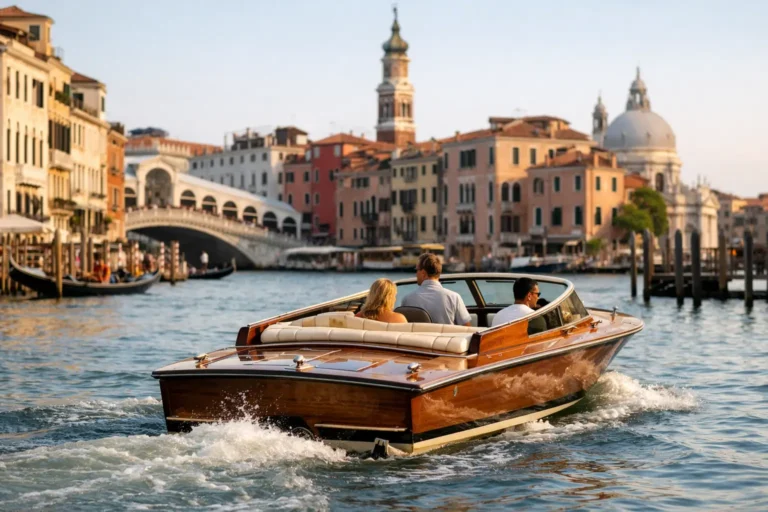
This is an elegant choice for couples who appreciate art, history, and beautiful interiors. Venice begins the trip with a sense of arrival unlike anywhere else in the world. A private water transfer from the airport to your hotel is not merely convenient – it sets the tone immediately. After settling in, the city is best experienced early in the morning and later in the evening, when the day visitors have thinned and the canals feel distinctly more intimate.
Florence brings a different energy: Renaissance architecture, atelier visits, exceptional museums, and restaurants where a table reservation should feel considered rather than obligatory. From there, Tuscany offers a natural exhale. A countryside stay near Chianti, Val d’Orcia, or the hills outside Florence allows for winery appointments, private cooking experiences, and leisurely drives through landscapes that deserve more than a passing glance.
Rome and the Amalfi Coast
For couples drawn to glamour, history, and a more animated rhythm, Rome and the Amalfi Coast create a compelling pairing. Rome calls for a centrally located hotel, knowledgeable private guiding, and enough unplanned time to wander neighborhoods such as Trastevere or Monti. It is a city that rewards context. Seeing the Vatican or the Colosseum with the right guide can transform an iconic visit into a vivid, personal story.
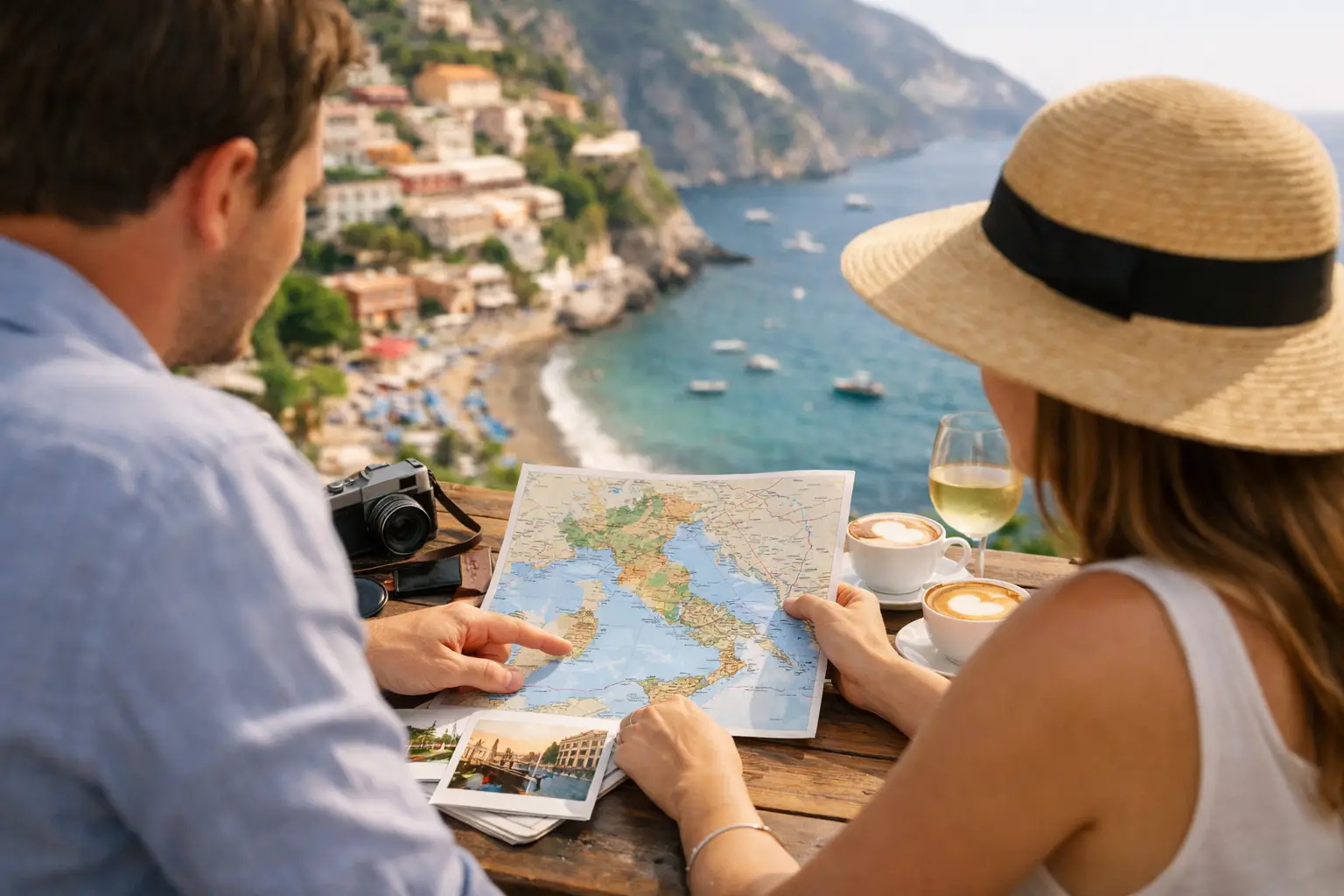
The coast that follows should be chosen carefully. Positano suits travelers who enjoy lively views, steep lanes, and a fashionable atmosphere. Ravello feels more serene and spacious, while Capri is ideal for couples who want a short island interlude with polished hotels and sea-facing lunches. In peak season, private drivers and boat arrangements are particularly valuable. The scenery is unforgettable; the public logistics can be less romantic.
Milan, Lake Como, and Piedmont
This route has a quieter confidence. Milan offers design, fashion, and sophisticated dining, while Lake Como provides classic Italian grandeur with a deeply restorative pace. A private boat on the lake, a garden visit, or a lunch in a waterfront village can fill a day without overfilling it.
For food and wine-minded couples, continuing to Piedmont adds another layer. The Langhe landscape is particularly appealing in autumn, when truffle season and harvest activities bring the region to life. This route is less about landmark collecting and more about refined pleasures, excellent service, and time at the table.
Let the Hotel Do More Than Provide a Bed
For a couple’s trip, the hotel is part of the story. The right room can make a two-night stay feel special; the wrong location can quietly drain time and energy from every day. A beautiful property is only the beginning. Consider whether you want to walk to dinner, wake up to water or vineyard views, use a spa, or have the privacy of a suite where lingering over breakfast is genuinely appealing.
In Venice, a discreet canal-side hotel may offer a calmer experience than a property near the busiest thoroughfares. In Rome, being centrally located can be worth more than a larger room farther out. Along the Amalfi Coast, the trade-off is often between dramatic views and easy accessibility. A concierge-led recommendation accounts for both the romance of the setting and the practical realities of getting there.
It is also worth reserving a few hotels that create distinct emotional markers in the journey. Perhaps one is a historic palazzo, another a rural estate, and the final stay a contemporary coastal retreat. Each change of setting should feel intentional, not like another item on a route map.
Protect the Pace With Private Logistics
Luxury travel is often felt most clearly in the moments between experiences. A private driver waiting after a long flight, luggage handled without discussion, and a transfer timed around your preferences all create the ease that allows a trip to feel personal.
Italy’s rail system is excellent for many city-to-city journeys, especially between Venice, Florence, Rome, and Milan. Yet trains are not always the best answer. A private transfer through Tuscany can include a vineyard lunch or a stop in a hill town. A driver on the Amalfi Coast eliminates the pressure of navigating narrow roads and limited parking. The correct choice depends on the route, the season, and whether the journey itself should become part of the day.
Arrival planning deserves the same attention. Venice is the clearest example: a signature water arrival is both practical and unforgettable. But premium coordination also matters in Rome, Milan, and Naples, where a smooth transfer protects the first hours of the trip from fatigue and confusion.
Reserve Space for One Meaningful Surprise
The best itineraries are structured, but they should never feel over-managed. Build in one experience that is personally significant: a private terrace dinner for an anniversary, a photographer for a proposal morning in Venice, a behind-the-scenes museum visit, or a private boat at sunset with champagne waiting aboard.
The gesture need not be extravagant to be memorable. It simply needs to feel specific. A favorite flower in the suite, a table at the restaurant you have wanted to try for years, or an arranged toast after a cooking lesson can carry more meaning than a generic grand gesture.
This is where early planning helps. Italy’s most desirable guides, suites, dining rooms, and private experiences are limited, especially from late spring through early fall. Booking ahead creates options, while still leaving the daily rhythm relaxed once you arrive.
Choose the Season With Intention
May, June, September, and early October are often ideal for a multi-region journey, offering pleasant weather and an active dining and cultural calendar. They are also popular, which means the right hotel and transportation arrangements should be secured well in advance. July and August suit travelers who prioritize the coast and pool time, though high temperatures and crowds can make major cities less appealing.
Winter has its own advantages. Venice can feel atmospheric and quiet, Rome is more comfortable for walking, and festive December stays bring an entirely different character to the cities. Some coastal and countryside properties close seasonally, so a winter route should be planned around places that are fully alive at that time of year.
A truly memorable Italy journey is measured less by how many destinations it includes than by how naturally it fits the two people taking it. With the right balance of discovery, comfort, and unscheduled time, every transfer, table, and view becomes part of a trip that feels beautifully your own.