How to Plan Multi City Italy Trip Right
Three Italian cities in eight days can feel glamorous on paper and exhausting in practice. The difference usually comes down to pacing, not ambition. If you are wondering how to plan multi city Italy trip details without turning a beautiful vacation into a series of transfers, the smartest approach is to build around rhythm, geography, and the kind of experience you actually want once you arrive.
Italy rewards intention. A well-planned journey from Venice to Florence to Rome can feel polished and effortless, while the same cities arranged in the wrong order, with poorly timed connections and overpacked sightseeing, can quickly lose their charm. The goal is not to see everything. It is to experience each stop well.
How to plan multi city Italy trip with the right pace
The first decision is not where to go. It is how much movement your trip can comfortably hold. For most luxury travelers, three cities over 10 to 12 nights is the sweet spot. That allows enough time for private touring, long lunches, hotel enjoyment, and the small moments that make Italy memorable – an unplanned aperitivo, a beautiful evening walk, a table worth lingering at.
If your trip is shorter than nine nights, two bases often work better than three. If your trip is two weeks or longer, you can begin to layer in a fourth destination, especially if one stop is slower by design, such as the Amalfi Coast, Lake Como, or the Tuscan countryside. The trade-off is simple: the more cities you add, the less depth you get in each one.
This is where many itineraries become too ambitious. Travelers often count sightseeing days and forget to count transfer days. Even when Italy’s train network is excellent, changing cities still means packing, check-out timing, station logistics, and arrival coordination. Private drivers and first-class rail can make this feel far smoother, but they do not eliminate the energy required to move.
Start with regions, not a wishlist
A refined itinerary usually begins by grouping destinations that make sense together. Northern classics like Milan, Lake Como, Venice, and Verona pair naturally. Central Italy flows well between Florence, Tuscany, Rome, and Umbria. Southern combinations often include Naples, the Amalfi Coast, Capri, Puglia, or Sicily.
The mistake is mixing distant points just because each one is iconic. Venice, Florence, Rome, and Taormina can be done, but not comfortably in one short trip unless you are willing to trade a relaxed pace for efficiency. For many travelers, that is not a worthwhile exchange.
Think in clusters. Venice, Florence, and Rome is a classic first journey because the route is direct and the contrast between cities is satisfying. Florence with a countryside stay in Tuscany and then Rome feels more spacious and romantic. Milan, Lake Como, and Venice leans polished and northern. Rome, Naples, and the Amalfi Coast suits travelers who want culture followed by coastal indulgence.
When in doubt, choose fewer transitions and stronger contrasts. A trip feels richer when each stop offers a distinct mood.
Choose the order carefully
Once your cities are selected, sequencing matters. You want the trip to unfold in a way that feels increasingly easy. In many cases, that means placing your most logistically complex destination first or last, depending on flight access and season.
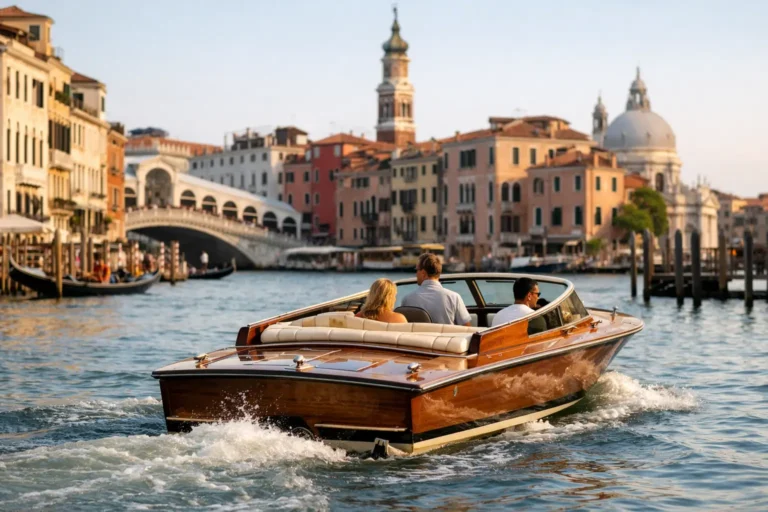
Venice is a good example. It is magical, but arrival details matter. If you can arrive smoothly and settle into the experience from the start, it becomes an elegant opening. For others, Venice is better saved for the finale, especially if a signature water arrival is part of the experience. Rome often works well at the end because international departures are easier and there is enough to fill any final hours gracefully.
Avoid backtracking when possible. If you land in Milan and depart from Rome, build southward. If flights work best into Venice and out of Naples, move in one direction. Open-jaw airfare often makes far more sense than returning to your starting point.
This is also where seasonal realities matter. In summer, coastal destinations may deserve the longer stay. In cooler months, cities and inland regions often carry the trip beautifully.
Build around how you like to travel
The best multi-city Italy itinerary is personal, not generic. Some travelers want art, architecture, and private museum access. Others care most about suites with views, memorable restaurants, and a driver who makes transitions feel invisible. Honeymooners may want romance and privacy. Families may need larger accommodations and more flexible pacing.
That is why hotel selection should happen early, not at the end. In Italy, the right hotel can shape the entire experience of a city. A tucked-away palace hotel in Venice creates a very different stay than a sleek modern property near the station. In Rome, location can mean quiet elegance or constant crowds. In Florence, it can determine whether your evenings feel intimate or overly busy.
Plan your days with breathing room. One private guided experience per day is often enough in cities like Rome and Florence. Venice usually benefits from a lighter hand. It is better enjoyed with time to wander, pause, and absorb the atmosphere. Tuscany may call for a driver, winery visits, and a late lunch rather than a dense schedule.
Luxury is rarely about doing more. It is about removing friction and choosing well.
Transportation is where trips are won or lost
For travelers planning Italy independently, transportation is usually the most underestimated piece. High-speed trains are excellent between major cities such as Milan, Venice, Florence, Rome, and Naples. For those routes, rail is often more comfortable and efficient than flying.
But train travel still requires precision. Which station is closest to your hotel? How much luggage are you bringing? Will someone meet you on arrival? Are you changing trains with limited time? On paper, a transfer can look simple. On the ground, it can feel very different.
Private drivers become especially valuable for countryside stays, coastal routes, airport coordination, and any arrival where convenience matters. They also allow for beautiful in-between moments – a stop for lunch, a winery en route, a scenic pause that would never happen on a rigid transfer schedule.
The most polished itineraries blend transportation styles. Train where it is best. Driver where it adds comfort, access, and ease. This is often the difference between a trip that feels organized and one that feels beautifully handled.
Leave space for what cannot be scheduled
A common planning mistake is trying to justify every day with major sights. Italy does not need that. Some of the best travel moments happen in the unscripted hours – a hidden courtyard in Florence, a quiet morning canal in Venice, a perfectly timed dinner in Rome after the city softens at dusk.
Leave at least one open half-day in each city. That does not mean wasted time. It means flexibility for shopping, rest, spontaneous reservations, weather shifts, or simply enjoying your hotel. This matters even more on celebratory trips. Anniversaries, honeymoons, and milestone birthdays should feel considered, not over-managed.
Thoughtful travelers also plan for recovery after arrival. If you are flying overnight from the US, do not schedule your most important tour on the first afternoon. Give yourself the grace of a slower start, a beautiful room, and a proper dinner.
The details that elevate the itinerary
Once the framework is set, smaller details create the feeling of ease. Restaurant reservations should support the flow of the day rather than compete with it. Museum tickets should be timed around energy and geography. Luggage handling, station assistance, airport escorts, and premium arrivals matter more than most people expect.
This is especially true in Italy, where charm and complexity often live side by side. The country offers extraordinary beauty, but not always in the most obvious or standardized way. That is part of its appeal. It is also why expert planning has real value.
For travelers who prefer not to manage every reservation and transfer personally, a concierge approach removes the guesswork. Newport Elite Concierge, for example, specializes in shaping Italian journeys that combine insider access with calm execution – especially helpful when a multi-city itinerary includes special occasions, private touring, and elevated arrival experiences.
A simple planning framework that works
If you want a practical way to decide, start here. Choose the total number of nights first. Then select no more than three city or region stops for a 10 to 12 night trip. Arrange them in a clean geographic line. Reserve your best hotels before building daily plans. Use rail for major city pairs and private transfers where comfort matters more than speed. Then protect at least a little unscheduled time in every destination.
That structure works because it respects how Italy feels, not just how it looks on a map. The country is best enjoyed when movement is thoughtful, service is polished, and each place has room to leave an impression.
The most memorable Italian itineraries are not the ones that check the most boxes. They are the ones that let you arrive well, stay beautifully, and move through each city with the sense that every detail has already been considered.